
ADDRESSING A DRAWBACK OF MINIMALLY INVASIVE SURGERY
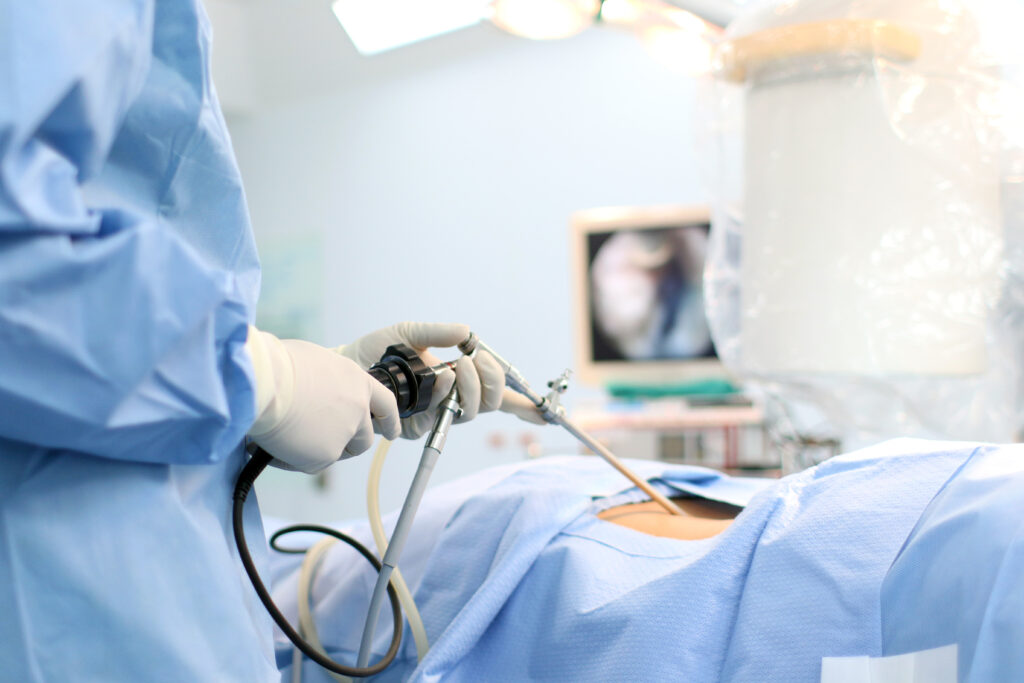
The PALPABLE project introduces a tactile sensing device for use in Minimally Invasive Surgery (MIS). MIS offers several advantages over traditional open surgery, all associated with the minimisation of incision size. These generally include decreased risk of infection, fewer complications, speedier healing times, shorter hospital stays, and an overall less painful patient experience.
However, a significant disadvantage of MIS is the lack of tactile feedback. In traditional open surgery, doctors often evaluate the health of organ tissue by manual palpation. In this manner, the operating surgeon can identify the presence, location and extent of tumorous tissue resulting in higher chances of a successful outcome.
PALPABLE: INTRODUCING TACTILE FEEDBACK IN MIS
PALPABLE aims to combat this limitation by introducing a novel tool to supply tactile feedback in MIS. This is a challenging task to assign to a sensor: human tactile perception is a complex sense that engages several mechanoreceptors located at the hands, the output of which is localised in space via the sense of proprioception. Naturally, manual organ palpation relies on the dexterous interaction of the surgeons’ fingers with the palpated tissue. However, laparoscopic incision points (trocar ports) limit the reachable workspace of inserted solid tools. To overcome this issue in MIS, a palpation tool has to deform inside the patient’s body.
Therefore, to achieve improved palpation, the main requirements for the PALPABLE tool’s design have been highlighted: we envision a multi-sensing palpation probe, hosting a variety of sensors that detect a wide range of tactile information to be used in stiffness evaluation of the palpated tissue. The probe will be inserted through a standardised trocar port, and steerable in a three-dimensional space within the patient’s body. The probe will be aware of its shape at each instant, and localise the tactile measurements on the targeted organ. Finally, the tactile measurements will be used to obtain an evaluation of the local tissue stiffness. The stiffness reconstruction will be communicated to the operating surgeon in the form of a heatmap: stiffer regions will be highlighted, indicating the location of tumorous tissue.
THE CHALLENGES
The first challenge in conceptualising the PALPABLE tool is the definition of the tool’s tactile perception capabilities. The type and magnitude of stimuli to be detected by the PALPABLE tactile sensors depend on the properties of the palpated tissue in both its healthy and diseased variations. The stiffness evaluation method, which generally requires concurrent measurements for force and deformation, should yield precise results. Moreover, an important design task is the minimisation of the tool’s size: the whole tool should be inserted through a port under 15mm wide. The articulation of the probe within the patient’s body, as well as the localisation of the measurements, are highly significant for the tool’s successful operation. Last but not least, the probe, its components, and all the measurement principles shall not be harmful to the human body, while sustainability considerations shall be addressed.
THE EXPERTS
The development of the PALPABLE tool requires expertise in several State-Of-The-Art (SOTA) technologies. The PALPABLE project has brought together a team of experts, covering a broad scientific spectrum from surgery and medical instrumentation to tactile sensing, optical circuits, readout systems, soft robotics, control and AI. In this series of posts, our experts will communicate interesting points related to their activities in PALPABLE. Stay tuned to find out how we overcome the design challenges and push forward the State-Of-The-Art technologies in MIS surgery!